Product design process is no longer a linear journey from idea to execution. In 2026, it is evolving into a dynamic, data-driven, and user-centered system shaped by rapid technological advancement, sustainability demands, and changing customer expectations. Businesses that once focused solely on aesthetics and functionality are now expected to design products that are scalable, ethical, intuitive, and deeply aligned with real user needs.
As digital transformation accelerates, modern product development requires close collaboration between design, engineering, and strategy teams. From early-stage ideation to final production, organizations are rethinking how the product development lifecycle should operate to stay competitive in an increasingly saturated market. This shift has made concepts like user experience design, iterative testing, and customer feedback integration more critical than ever.
In this article, we explore the future of the product design process and the key trends that will define it in 2026. You’ll gain insight into emerging design methodologies, the growing role of sustainability, and how innovation in product design is reshaping industries across digital, industrial, and physical products. Whether you are a designer, product manager, or business leader, understanding these changes is essential for building products that succeed in a fast-evolving marketplace.
Understanding the Product Design Process
The product design process is the structured journey that transforms an idea into a functional, market-ready solution. It brings together creativity, strategy, engineering, and user insight to ensure a product not only works but also delivers real value. Rather than being a one-time activity, modern product design is continuous and adaptive, evolving alongside user needs, technology, and market expectations.
At its core, this process helps teams reduce uncertainty, make informed decisions, and build products that solve meaningful problems. Whether designing a digital platform, a physical product, or a hybrid solution, a well-defined design process creates alignment between stakeholders and ensures consistency throughout development.
What Is the Product Design Process?
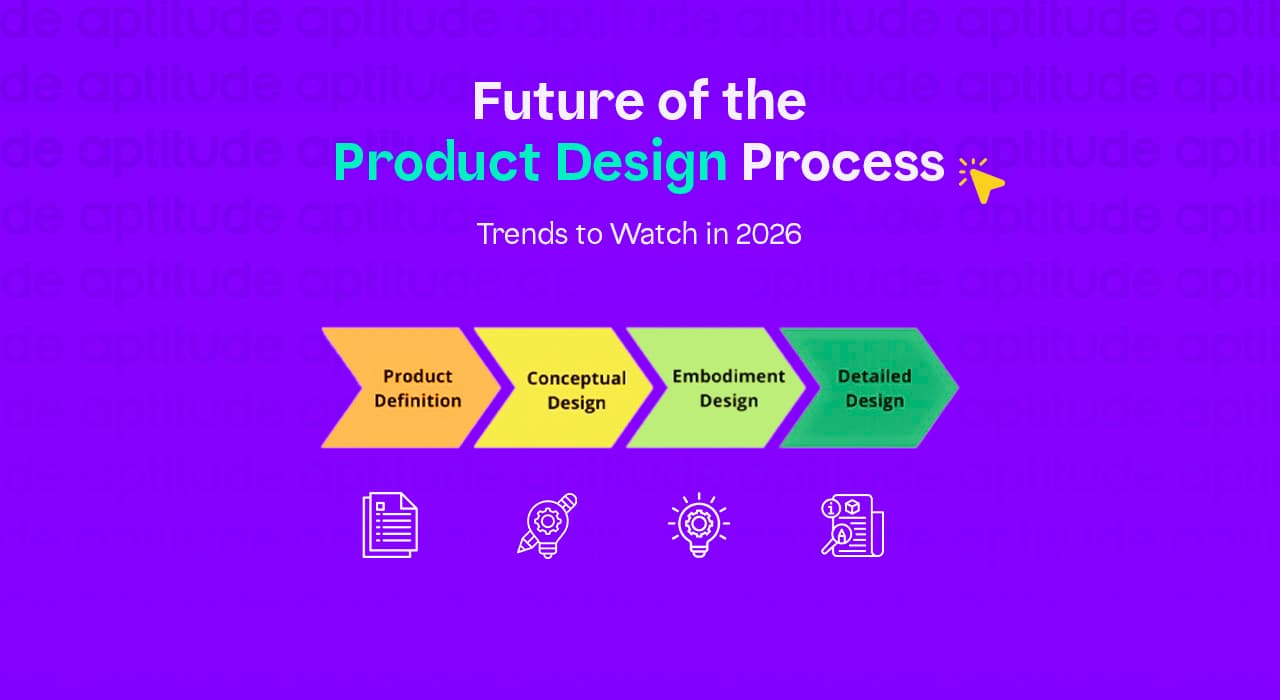
The product design process refers to the structured set of steps used to conceptualize, develop, test, and refine a product before it reaches the market. It typically begins with identifying a problem or opportunity and ends with a solution that meets both user expectations and business objectives.
This process often includes research, ideation, prototyping, validation, and iteration. However, it is not always linear. Teams frequently move back and forth between stages to improve usability, functionality, or performance. In today’s environment, collaboration across design, engineering, and product teams is essential to ensure feasibility and scalability from the earliest stages.
A well-executed product design process balances creativity with practicality, allowing innovation to emerge without compromising quality or user experience.
Importance of the Product Development Lifecycle
The product development lifecycle provides the broader framework within which the design process operates. It defines how a product evolves from concept to launch and beyond, including planning, development, testing, deployment, and continuous improvement.
Understanding this lifecycle is crucial because it helps teams manage resources efficiently, reduce development risks, and maintain consistency across different phases of production. When design decisions are aligned with the overall lifecycle, organizations can respond more effectively to market changes, user feedback, and technological advancements.
A strong product development lifecycle also supports long-term growth. It encourages continuous learning, iterative improvement, and sustainable innovation—ensuring that products remain relevant and competitive long after their initial release.
Key Trends Influencing Product Design in 2026
Product design in 2026 is being shaped by rapid technological evolution, shifting user expectations, and a stronger emphasis on responsibility and efficiency. Organizations are no longer focused solely on aesthetics or functionality; instead, they are rethinking how products are imagined, built, and experienced throughout their lifecycle. The following trends highlight the most impactful changes redefining modern product design.
Innovative Product Ideation Techniques
Product ideation in 2026 is becoming more collaborative, data-informed, and experimentation-driven. Teams are moving beyond traditional brainstorming sessions and embracing structured ideation frameworks supported by real user insights, behavioral data, and market validation.
Designers and product teams increasingly rely on rapid concept testing, cross-functional workshops, and AI-assisted ideation tools to explore multiple solutions before committing to development. This approach reduces risk and encourages creative problem-solving while ensuring ideas are grounded in real user needs. The focus has shifted from generating more ideas to generating better, more feasible ones that align with both business goals and user expectations.
Advancements in Digital Product Design Processes
Digital product design processes are evolving to support faster development cycles and greater flexibility. Cloud-based design tools, real-time collaboration platforms, and integrated design systems are enabling teams to work more efficiently across locations and disciplines.
In 2026, digital product design places greater emphasis on scalability, performance, and accessibility. Design systems are no longer static libraries; they are living frameworks that evolve alongside products. Automation and AI-powered design tools are also helping teams streamline repetitive tasks, allowing designers to focus more on strategy, creativity, and problem-solving rather than execution alone.
Role of Sustainable Product Design Principles
Sustainability has become a core consideration rather than an optional feature in product design. Companies are increasingly expected to minimize environmental impact while maintaining quality and usability. This shift influences decisions related to materials, production methods, energy consumption, and product lifespan.
Sustainable product design in 2026 focuses on long-term value creation. Designers are prioritizing durability, modularity, and recyclability, ensuring products can adapt or be reused instead of discarded. Beyond environmental benefits, sustainable design also strengthens brand trust and aligns businesses with growing consumer awareness around ethical and responsible innovation.
Integration of User Experience Design Processes
User experience design is no longer confined to interface aesthetics; it now plays a strategic role throughout the entire product lifecycle. In 2026, UX processes are deeply integrated into research, ideation, testing, and post-launch optimization.
Design teams are placing greater emphasis on understanding user behavior, emotional responses, and contextual needs. Continuous feedback loops, usability testing, and data-driven insights help refine products over time. This integration ensures that products remain intuitive, accessible, and relevant as user expectations evolve.
By embedding user experience design into every stage of development, organizations can create products that not only function well but also build long-term user trust and engagement.
The Impact of Design Thinking Methodology
Design thinking has become a foundational approach in modern product design because it prioritizes understanding people before building solutions. Rather than starting with assumptions or technical constraints, this methodology encourages teams to deeply explore user problems, behaviors, and motivations. In 2026, design thinking is less about following a rigid framework and more about adopting a mindset that supports experimentation, empathy, and continuous learning.
Organizations that embrace design thinking are better equipped to handle uncertainty and complexity. By focusing on real-world problems and validating ideas early, teams reduce costly mistakes and build products that genuinely solve user needs. This human-centered approach bridges the gap between innovation and usability, making it a critical driver of successful product outcomes.
Principles of User-Centered Design
User-centered design places people at the core of every decision. Instead of designing based on assumptions or internal preferences, teams rely on research, observation, and user feedback to guide their choices. This approach ensures that products are intuitive, accessible, and aligned with real-world usage patterns.
Key principles include empathy, inclusivity, and usability. Designers must understand not only what users do, but why they do it. This involves considering emotional responses, accessibility needs, and contextual challenges. When products are built around genuine user needs, they naturally become easier to adopt, more engaging, and more effective over time.
User-centered design also promotes collaboration between designers, developers, and stakeholders, ensuring that user needs are not lost during technical or business decision-making.
Iterative Design Process and Its Importance
The iterative design process is built on the idea that great products are refined, not finalized, in a single attempt. Instead of treating design as a one-time phase, teams continuously test, learn, and improve throughout the product lifecycle.
Each iteration involves creating prototypes, gathering feedback, identifying weaknesses, and making informed adjustments. This approach allows teams to respond quickly to user insights, technical limitations, or market changes. It also reduces risk by identifying issues early, when they are easier and less costly to fix.
In 2026, iteration is essential for keeping products relevant in fast-changing environments. Continuous improvement ensures that products evolve alongside user expectations, technological advancements, and business goals—making the iterative design process a key driver of long-term success.
Usability Testing Methods for Modern Product Design
Usability testing plays a critical role within the product design process, ensuring that ideas translate into functional, user-friendly solutions. In modern product development, testing is no longer treated as a final checkpoint—it is an ongoing activity embedded throughout the product development lifecycle. Whether teams are working on a digital platform, a physical product, or a hybrid system, usability testing helps validate decisions made during the design thinking methodology and supports continuous improvement.
As organizations adopt more agile and user-focused workflows, usability testing becomes a key component of the product design and development process, helping teams align innovation with real-world usability.
Common Usability Testing Methods
Modern product teams use a combination of qualitative and quantitative testing methods depending on the stage of the product design process.
One widely used approach is task-based testing, where users are asked to complete specific actions while designers observe behavior, friction points, and decision patterns. This method is especially valuable during the iterative design process, as it reveals usability issues early and allows for rapid refinement.
Another common method is prototype testing, which is often applied in the early stages of the new product design process. Low- or high-fidelity prototypes help validate layout, navigation, and interaction before committing to full development. This approach is frequently used across the digital product design process, electronic product design process, and even medical device product design process, where usability directly impacts safety and effectiveness.
A/B testing is widely used in mature products to compare design variations and measure performance. This method is especially useful in optimizing interfaces within a product service design process or refining conversion flows.
In more complex environments such as industrial product design process, engineering product design process, or CAM computer-aided design process, usability testing may also involve simulations and real-world usage scenarios to evaluate functionality, ergonomics, and reliability.
Importance of Customer Feedback Integration
Customer feedback integration is a critical bridge between usability testing and long-term product success. While testing reveals how users interact with a product, feedback explains why they behave that way. Incorporating this insight strengthens the overall product and process design strategy.
When feedback is continuously collected and analyzed, teams can make informed improvements throughout the product design process steps, rather than relying on assumptions. This approach supports better decision-making across the product design development process and reinforces user-centered design principles.
In modern workflows, customer feedback is integrated through usability sessions, surveys, behavioral analytics, and post-launch insights. This is especially important in agile product design processes, where rapid iterations depend on real-time user input.
By embedding feedback loops into the product lifecycle management strategy, organizations ensure that innovation remains aligned with user needs. This not only enhances satisfaction but also drives sustainable growth, long-term adoption, and meaningful innovation in product design.
Forecasting Future Developments in the Product Development Lifecycle
The future of the product development lifecycle is being shaped by rapid technological change, evolving user expectations, and a stronger focus on sustainability and adaptability. As markets become more competitive, organizations are rethinking how they approach the product design process, shifting from linear workflows to flexible, insight-driven systems. This evolution is redefining how products are imagined, built, tested, and refined across industries.
Modern teams are moving beyond static models and adopting interconnected frameworks that align product lifecycle management, innovation, and user experience into a single strategic vision.
Incorporation of Innovative Product Design Techniques
Innovation in product design is no longer limited to visual creativity or feature enhancements. It now involves intelligent integration of data, technology, and human-centred thinking throughout the product design and development process. Advanced tools, automation, and AI-driven insights are reshaping how teams approach product ideation techniques and early-stage experimentation.
The growing adoption of the agile product design process allows teams to respond quickly to change, test assumptions early, and refine concepts through continuous iteration. This approach supports faster validation and aligns closely with the iterative design process, reducing risk while improving overall product quality.
Across industries, from digital product design processes to industrial product design processes, innovation is being driven by cross-functional collaboration. Engineering, design, and business teams now work in parallel rather than in sequence, strengthening the connection between product design and process design.
In specialized sectors such as medical device product design process or electronic product design process, innovation is also guided by compliance, safety, and precision—making structured workflows and validated testing methods essential.
Challenges and Opportunities Ahead
As product ecosystems grow more complex, organizations face increasing challenges in maintaining alignment across teams, tools, and timelines. Managing the full scope of product design process steps—from ideation to deployment—requires clear governance and adaptable workflows.
One major challenge lies in balancing speed with quality. While rapid iteration is encouraged, overlooking foundational elements such as user-centered design principles or usability testing methods can lead to poor user experiences and rework. Additionally, integrating sustainability into product and process design adds complexity but also creates long-term value.
On the opportunity side, advancements in product lifecycle management systems and CAM computer-aided design processes are enabling smarter decision-making and better collaboration. Organizations that successfully integrate customer feedback integration into their workflows can continuously refine offerings and stay aligned with real-world needs.
The future of the product design development process lies in adaptability—combining innovation, empathy, and efficiency. Businesses that embrace this mindset will be better positioned to lead in a market where expectations evolve as quickly as technology itself.
Conclusion of the Product Design Process
The landscape of product design in 2026 is defined by agility, innovation, and a relentless focus on user needs. From the early stages of product ideation techniques to the final phases of the product design and development process, organizations must integrate insights from the product development lifecycle, user experience design process, and usability testing methods to create products that resonate with real users.
Adopting a design thinking methodology and emphasizing user-centered design principles ensures that each iteration delivers meaningful value while mitigating risk. At the same time, incorporating sustainable product design practices and leveraging digital product design processes prepares businesses to meet both market expectations and environmental responsibilities.
Looking forward, the combination of agile product design processes, innovation in product and process design, and continuous customer feedback integration will shape products that are not only functional but also adaptable, ethical, and user-centric. Organizations that embrace these trends and effectively manage their product lifecycle management will be better equipped to navigate challenges, seize opportunities, and maintain a competitive edge in an ever-evolving market.
The future of the product design process is not just about creating products—it’s about designing experiences that matter, solving real problems, and building solutions that endure.
Frequently Asked Questions (FAQs)
What is the difference between the product design process and product development lifecycle?
The product design process focuses on transforming ideas into functional, user-centered solutions through research, prototyping, and iterative testing. The product development lifecycle, on the other hand, covers the entire journey of a product—from ideation to market launch and post-launch improvements, including planning, engineering, and production. The two are interconnected, with the design process guiding and shaping the broader lifecycle.
Why is user-centered design important in modern product development?
User-centered design ensures products meet the real needs, behaviors, and expectations of users. By prioritizing usability, accessibility, and user experience, organizations reduce friction, improve adoption, and deliver meaningful solutions. Integrating feedback through usability testing methods allows teams to refine products efficiently and avoid costly mistakes during the product design and development process.
How are digital tools transforming the product design process in 2026?
Digital tools are revolutionizing how products are designed by enabling real-time collaboration, faster prototyping, and scalable workflows. Digital product design processes, AI-assisted ideation, and cloud platforms allow design, engineering, and strategy teams to work together seamlessly. This accelerates the iterative design process and helps create products, whether software, electronics, or medical devices, that are innovative, efficient, and reliable.
What role does sustainability play in modern product design?
Sustainable product design focuses on reducing environmental impact through eco-friendly materials, efficient production methods, and durable, recyclable products. Incorporating sustainability into product and process design not only benefits the environment but also builds brand trust and aligns with consumer expectations. It is a critical part of effective product lifecycle management in today’s market.
How can organizations effectively integrate customer feedback into product design?
Organizations can integrate feedback by collecting insights through usability tests, surveys, analytics, and post-launch reviews. Embedding this feedback into agile product design processes and the iterative design process helps teams continuously refine features, improve user experience, and align the product design process steps with real user needs, resulting in higher satisfaction and long-term adoption.