Introduction
Launching a Digital Product always begins with one critical decision:
Should you start with an MVP or build a full product from day one?
This choice defines how fast you enter the market, how much you invest, and how effectively you validate your idea. In a structured digital product strategy, this is not just a development decision — it’s a core part of your launch foundation.
The Common Confusion Between MVP and Full Product
Many teams misunderstand the difference between MVP development and full product development. An MVP is often seen as an incomplete version, while a full product is assumed to be the “proper” way to launch.
In reality, an MVP or minimum viable product — is a focused version built to validate ideas and test real user demand. On the other hand, full-scale software product development includes a complete set of features designed for scale and long-term use.
The confusion usually comes from not understanding the purpose of the first release. Teams either overbuild through feature-rich product development without validation or underbuild without delivering real value. This leads to poor decisions early in the product development lifecycle.
Why This Decision Impacts Your Launch Success
The choice between MVP and full product directly affects your speed, cost, and risk. A well-planned MVP development process allows you to test assumptions, gather feedback, and move quickly through early-stage validation.
In contrast, jumping into end-to-end product development without validation increases complexity and delays learning. It also puts more pressure on your product launch strategy, as you are relying on assumptions instead of real user insights.
Ultimately, this decision determines whether your launch is driven by data or guesswork, and that difference defines the success of your entire product journey.
What Is an MVP?
In modern product development, an MVP is not about building less — it’s about building smart. It represents a focused approach within the MVP development process, where the goal is to deliver core value while minimizing unnecessary complexity. Instead of investing heavily in full-scale features, teams use MVP to validate ideas, test assumptions, and move faster within the overall digital product development journey.
Simple Definition of MVP
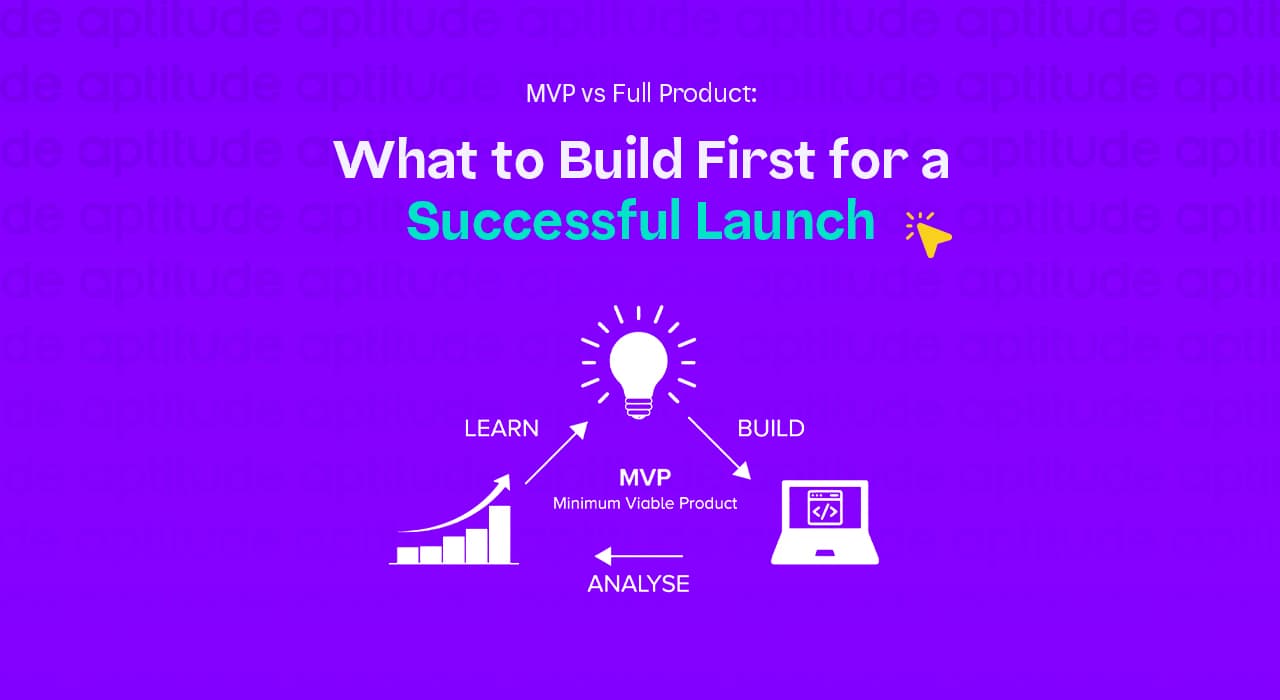
An MVP, or minimum viable product, is the simplest version of a product that solves the main problem for users. It includes only the essential features required to deliver value, without additional layers that can delay the launch.
In practical terms, MVP app development focuses on building a usable product that can be released quickly and improved through real feedback. This approach is widely used in MVP for startups, where speed, learning, and adaptability are more important than completeness.
Key Purpose of an MVP
The primary purpose of an MVP is not perfection — it is validation. It allows teams to test their idea in the real market and gather insights before committing to full-scale software product development.
MVP helps validate whether the core idea actually solves a real problem. Through early-stage product testing and product-market fit testing, teams can understand how users respond to the product and whether the concept has real demand. This step ensures that development decisions are based on real data, not assumptions.
Reducing Risk
One of the biggest advantages of MVP development is risk reduction. By limiting the initial scope, teams avoid investing heavily in features that may not be needed. This aligns with the lean startup methodology, where the focus is on rapid learning and iteration. It also supports a more efficient path toward scaling, as the product evolves based on a continuous user feedback loop.
What Is a Full Product?
A full product represents a mature stage of software product development, where the focus shifts from validation to completeness, performance, and scalability. Unlike an MVP, which is built to test ideas, a full product is designed to deliver a comprehensive experience that meets a wider range of user needs. It is typically developed after initial validation, when the product direction is clear and ready for expansion within the broader product development lifecycle.
When a Product Becomes “Full”
A product becomes “full” when it moves beyond core functionality and starts addressing a complete set of user requirements. This stage is usually reached after successful validation through MVP and consistent feedback from real users.
At this point, teams transition into end-to-end product development, where the goal is not just to test but to scale. The product is built with a clear technical product roadmap, stronger architecture, and long-term growth in mind. It also aligns closely with SaaS product development or enterprise-level solutions where reliability and depth are essential.
Key Characteristics of a Full Product
A full product is defined not just by the number of features, but by the overall quality, stability, and experience it delivers. It reflects a more advanced stage of digital product development, where both user expectations and business goals are fully addressed.
Complete Feature Set
A full product includes a broader and more refined set of features that go beyond the core functionality. This feature-rich product development approach ensures that users can perform a wide range of actions without limitations. These features are usually prioritized based on user feedback and aligned with the overall product lifecycle management strategy.
Polished User Experience
User experience in a full product is more refined, consistent, and optimized. It goes through a structured UI/UX design process, where usability, performance, and visual consistency are carefully enhanced. Combined with thorough software QA testing, this ensures that the product feels stable, intuitive, and ready for a larger audience.
MVP vs Full Product — Key Differences
Understanding the difference between an (Minimum Viable Product) MVP and a full product is essential for making the right decision at the right stage. Both approaches serve different purposes within the product development lifecycle. An MVP focuses on validation and speed, while full product development focuses on scale, stability, and long-term growth. Choosing between them depends on where your product stands in its journey and what you need to achieve next.
Development Speed vs Completeness
The biggest difference between MVP development and full product development lies in speed versus completeness. An MVP is built quickly through rapid product development, focusing only on core functionality that delivers immediate value. This allows teams to launch faster, test ideas, and gather feedback early.
In contrast, full product development follows a more detailed end-to-end product development approach. It prioritizes completeness, incorporating a wider range of features, deeper system architecture, and refined user experience. While this ensures a more polished outcome, it significantly increases development time.
Development Cost vs Product Build Investment
Cost is another major factor. MVP helps control initial expenses by limiting scope and focusing on essentials. This makes it ideal for startups or early-stage products that need to validate ideas without committing large budgets. Many teams choose affordable MVP development for small businesses or early-stage ventures to reduce financial risk.
On the other hand, full product development requires a higher level of investment. It involves custom software development, advanced features, and a complete engineering setup. While the cost is higher, it is often justified when the product is already validated and ready for scaling within a broader digital product development strategy.
Product Validation vs Scaling
At its core, the difference comes down to purpose. MVP is built for validation, while a full product is built for scaling.
An MVP supports startup product validation, allowing teams to test assumptions, achieve product-market fit testing, and refine the product through a continuous user feedback loop. It is the foundation for learning what works.
A full product, however, is designed for growth. It aligns with product scaling services and a structured technical product roadmap, enabling the product to handle larger user bases, complex features, and long-term expansion.
When Should You Start With an MVP?
Starting with an MVP is the most effective approach when clarity is low and risk is high. In the early stages of a product, the goal is not to build everything. It’s to validate whether the idea is worth building at all. This is where a structured MVP development process becomes essential, allowing teams to move quickly, test assumptions, and refine the product through real insights instead of guesswork.
Early-Stage Idea Validation
An MVP is ideal when your product idea is still unproven. At this stage, the focus should be on startup product validation and understanding whether users actually need the solution. Instead of investing in full-scale software product development, teams can build a lightweight version and test it through product-market fit testing.
This approach ensures that decisions are based on real user behavior, making the overall digital product development process more efficient and data-driven.
Limited Budget or Resources
When resources are limited, building a full product can quickly become risky. MVP helps control costs by focusing only on essential features and avoiding unnecessary complexity. This makes it a practical choice for startups and small teams looking for affordable MVP development for small businesses.
By prioritizing core functionality, teams can reduce initial investment while still creating a product that delivers value and supports early learning.
Uncertain Market Demand
If there is uncertainty around market demand, launching an MVP is the safest approach. It allows teams to test how users respond to the product before committing to a larger build. Through early-stage product testing and a continuous user feedback loop, teams can identify what works and what needs improvement.
This reduces the risk of building a product that fails to gain traction and ensures a stronger foundation for future scaling within the product development lifecycle.
When Should You Build a Full Product?
Building a full product is the right move when uncertainty is low and clarity is high. At this stage, the goal is no longer validation — it’s execution, expansion, and scale. Once insights from MVP or early testing confirm real demand, teams can move into full product development with confidence. This transition is a key step in the broader digital product development journey, where the focus shifts toward delivering a complete, reliable, and scalable solution.
Proven Market Demand
A full product should be built when there is clear evidence that users want and use the solution. This usually comes after successful product-market fit testing and consistent feedback from real users. When demand is proven, investing in software product development becomes less risky and more strategic.
At this point, the product is no longer based on assumptions. It is backed by data, making it ready for expansion through a structured product development lifecycle.
Clear Product Strategy
A full product requires a well-defined direction. This includes a clear product strategy roadmap, feature priorities, and long-term goals. Without this clarity, full-scale development can become inefficient and unfocused.
When teams have a solid plan in place, they can move forward with end-to-end product development, ensuring that design, engineering, and business objectives are fully aligned. This level of planning is essential for building a product that is not only functional but also sustainable.
Competitive Market Position
In competitive markets, users expect more than just basic functionality. A full product becomes necessary when differentiation, performance, and experience are critical to success. This involves feature-rich product development, strong scalable product architecture, and a refined user experience.
At this stage, investing in custom software development allows teams to build a product that stands out, supports growth, and competes effectively within the market.
Common Mistakes to Avoid During the MVP or Product Development
Choosing between MVP and full product is not just about strategy—it's also about avoiding critical mistakes that can slow down or completely derail your launch. Many teams fail not because of poor ideas, but because they make the wrong decisions at the wrong time within the product development lifecycle. Understanding these mistakes helps ensure that your digital product development approach stays efficient, focused, and aligned with real user needs.
Building Too Many Features Too Early
One of the most common mistakes is trying to build everything at once. Teams often jump into feature-rich product development before validating the core idea, assuming that more features will create more value.
In reality, this approach increases complexity, delays launch, and wastes resources. Instead of focusing on MVP development, teams end up overbuilding without clear direction. A better approach is to prioritize core functionality first, validate it through real users, and then expand gradually through a structured product development lifecycle.
Skipping Validation
Skipping validation is one of the biggest risks in product development. Without proper startup product validation and product-market fit testing, teams build products based on assumptions rather than real demand.
This often leads to poor adoption after launch, regardless of how well the product is built. A strong MVP development process ensures that ideas are tested early through early-stage product testing and refined using a continuous user feedback loop. Validation is what turns an idea into a viable product.
Misunderstanding User Needs
Another critical mistake is not fully understanding what users actually need. Teams may assume they know the problem, but without proper research, these assumptions often lead to ineffective solutions.
A successful product requires deep insight into user behavior, pain points, and expectations. This is where aligning the UI/UX design process with real user data becomes essential. When user needs are clearly understood, the product becomes more intuitive, valuable, and aligned with long-term growth within the digital product development strategy.
How to Decide What to Build First
Deciding what to build first is not about choosing features—it’s about choosing direction. The right decision ensures that your product moves forward with clarity, speed, and purpose. In a structured digital product strategy, this step defines whether you focus on validation through MVP development or move toward full-scale software product development. The key is to prioritize what delivers value now while keeping long-term growth in mind.
Focus on Core Value
The first priority should always be the core value your product delivers. Instead of trying to solve everything at once, focus on the single most important problem your product is designed to solve. This is the foundation of a strong minimum viable product, where only essential functionality is built.
By focusing on core value, teams can move faster through the MVP development process, reduce unnecessary complexity, and validate the idea through real users. This approach ensures that the product is meaningful from the start, rather than overloaded with features that may not be needed.
Define Success Metrics
Before building anything, it’s important to define what success looks like. Clear metrics such as user activation, engagement, or conversion help guide decisions throughout the product development lifecycle.
These metrics act as a benchmark for evaluating whether the product is delivering value. They also support better product release management, as teams can measure performance and adjust their approach based on real data. Without clear success metrics, it becomes difficult to understand whether the product is moving in the right direction.
Align With Business Goals
Every product decision should connect back to business objectives. Whether the goal is user growth, revenue, or market positioning, alignment ensures that development efforts are meaningful and sustainable.
This is where a clear product strategy roadmap becomes essential. It helps teams balance short-term execution with long-term vision, ensuring that both MVP development and full product expansion contribute to overall business success. When product and business goals are aligned, the result is a more focused, scalable, and impactful digital product.
Conclusion
Choosing between an MVP and a full product is not about picking one over the other — it’s about choosing the right approach at the right stage of your product journey. A well-structured digital product strategy and a clear digital product launch process ensure that you move forward with clarity, reduce unnecessary risk, and build with purpose.
Start Small, Learn Fast, Then Scale
The most effective approach for modern products is simple: start small, learn quickly, and scale based on real insights. Through a focused MVP development process, teams can validate ideas, gather feedback, and refine the product using a continuous user feedback loop.
This approach aligns with the lean startup methodology, where rapid learning is prioritized over perfection. Once the product proves its value through product-market fit testing, it can evolve into full-scale software product development with confidence.
Making the Right Choice for Your Product
The right decision depends on your current stage, resources, and level of certainty. If your idea is still unproven, starting with a minimum viable product is the smarter and safer choice. If you already have validated demand and a clear product strategy roadmap, moving toward full product development becomes the next logical step.
Ultimately, success comes from alignment — between product, users, and business goals. When that alignment is clear, your product is not just built to launch — it’s built to grow within a structured digital product launch process.
Frequently Asked Questions
What is the difference between MVP and full product?
An MVP focuses on validating the core idea with minimal features, while a full product delivers a complete, scalable solution with advanced features and refined experience.
Is MVP always necessary?
Not always, but in most cases, it’s the smarter starting point. MVP helps reduce risk, test demand, and make better decisions before investing in full product development.